Mortgage Market Update: What Homebuyers and Homeowners Need to Know Right Now 5/26
Weekly Market Breakdown: Mortgage Rates, Oil Prices, and What Buyers Need to Watch This Week

The mortgage market is starting the week with a familiar theme: rates are still elevated, buyers are still payment-sensitive, and global headlines are moving the bond market.
This morning, the biggest story is the movement in U.S. Treasury yields, especially the 10-year Treasury, which mortgage rates tend to follow closely. Treasury yields moved lower today as oil prices eased and investors reacted to ongoing U.S.–Iran headlines. The 10-year Treasury fell to around the 4.50% range, after recently moving higher when oil and inflation concerns picked up.
That matters because when the 10-year Treasury yield rises, mortgage pricing usually gets worse. When it falls, lenders may get some room to improve pricing. It does not always happen instantly, but the bond market is one of the biggest drivers of daily mortgage rate movement.
Where Mortgage Rates Are Right Now
Mortgage rates remain higher than earlier this spring. Freddie Mac reported that the average 30-year fixed mortgage rate was 6.51% as of May 21, 2026, up from 6.36% the week before. The average 15-year fixed rate was 5.85%, up from 5.71% the prior week.
Bankrate’s May 26, 2026 rate data showed the national average 30-year fixed at 6.70% with a 6.76% APR, while the 15-year fixed was listed at 6.05% with a 6.14% APR. FHA pricing was slightly lower on their national survey, with the 30-year FHA at 6.41% and 6.46% APR.
The key point: rates are not crashing, but there may be some short-term relief if Treasury yields continue to move lower.
Why Oil Prices Matter for Mortgage Rates
Oil matters because energy prices feed into inflation expectations. If oil prices rise sharply, investors may worry that inflation will stay higher for longer. That can push Treasury yields higher, which can pressure mortgage rates upward.
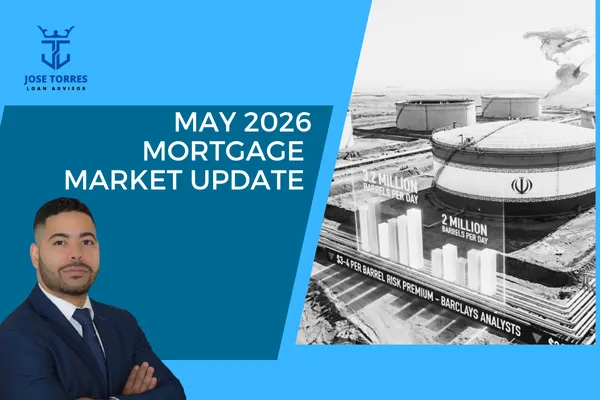
Today’s improvement in bonds came partly from lower oil prices and optimism around a potential easing of tensions tied to the Strait of Hormuz. MarketWatch reported that West Texas Intermediate crude dropped more than 4% as investors watched for signs of de-escalation and possible reopening of key oil routes.
For buyers, that means the mortgage market is not just watching housing data. It is also watching oil, inflation, war headlines, and Federal Reserve expectations.

What This Means for Buyers
Buyers should not assume that one good day in the bond market means rates are suddenly fixed. The market is still volatile. A positive bond day can help pricing, but one bad inflation report or one geopolitical shock can push rates back up quickly.
The smartest move for buyers right now is to focus on structure. That means knowing the payment before making an offer, understanding how much cash is needed to close, and using seller credits strategically.
In this market, seller credits can be powerful. They can help cover closing costs, reduce cash to close, or potentially buy down the interest rate. For buyers who are close on monthly payment, a well-structured credit can sometimes matter more than a small price reduction.
What This Means for Sellers and Agents
The market is not dead, but buyers are more sensitive to payment than they were when rates were lower. Listings that are priced too high, need work, or offer no flexibility may sit longer.
At the same time, inventory has improved. NAR reported that April existing-home sales increased 0.2%, with sales improving in the Midwest and South, staying flat in the Northeast, and declining in the West.
More inventory gives buyers more options, but affordability is still the main obstacle. Sellers who understand that and price realistically will have a better chance of attracting serious buyers.
This Week’s Market Watch
The biggest things to watch this week are oil prices, the 10-year Treasury yield, inflation data, and any new headlines tied to the Middle East. If oil stays lower and Treasury yields continue to ease, mortgage pricing could stabilize. If inflation fears return, rates could move higher again.
For buyers, this is why it is important to stay updated and not rely on old quotes. A rate quote from last week may not reflect today’s pricing. Mortgage pricing can change quickly, especially in a headline-driven market.
Bottom Line
Mortgage rates are still elevated, but the market is not frozen. Buyers need strategy, not fear. Sellers need realistic pricing, not wishful thinking. Agents who can explain payments, credits, and financing options clearly will have the advantage this week.
The play right now is simple: know your numbers, structure the deal correctly, and move when the right property lines up.
About Jose Torres

Jose Torres is a licensed mortgage professional helping clients throughout New Jersey, New York, Florida, and other approved states. He specializes in purchase loans, refinances, cash-out transactions, investment properties, and non-QM financing solutions.
Jose works closely with homebuyers, real estate agents, and financial professionals to provide clear guidance and efficient closings.